Feeling stressed or want to treat your cat to something special? Catnip tea is a perfect choice. This herbal drink, made from the catnip plant, soothes your nerves and excites your feline friend. Curious about how to make catnip tea? You’ve come to the right place.
You can brew a catnip tea for your cat or yourself at home with a few ingredients. This guide covers making catnip tea, from benefits and recipes to catnip water for cats.
Let’s explore catnip tea, unlock its benefits, and create cozy moments for you and your feline friend.
Table of Contents
What is Catnip Tea?

Catnip tea is brewed from the catnip plant, a mint-family herb known for its calming and stimulating effects. Called Nepeta cataria, catnip has been a staple in herbal teas for humans and treats for cats. Brewing catnip tea is straightforward, using dried or fresh leaves, and it’s versatile for you and your cat. Want to know how catnip tea for cats differs from human recipes? It’s about preparation and serving size, which we’ll dive into.
Here are the basics of catnip tea:
Catnip Plant Overview
Catnip is a perennial herb with heart-shaped leaves and a minty aroma. It thrives in sunny gardens or pots, making it easy to grow. The leaves contain nepetalactone, driving catnip tea’s calming effects for humans and playful buzz for cats. Use fresh or dried leaves for making catnip tea, a key ingredient in catnip recipes.
How It’s Used
Humans drink catnip tea to relax, ease digestion, or soothe headaches, typically using dried leaves. For cats, catnip tea for cats or catnip water sparks play or calms anxiety, served in small doses. Whether it’s a catnip tea recipe for humans or a catnip tea for cats recipe, catnip’s versatility shines in teas or treats.
History of Catnip Tea
From Europe to Asia, Catnip has been used for centuries in herbal medicine. Ancient herbalists brewed catnip tea for insomnia and fever, valuing its sedative properties. Today, how to make catnip tea for humans continues this tradition, which is rooted in historical catnip recipes and offers a natural remedy for stress and discomfort.
Benefits of Catnip Tea
Catnip tea benefits you and your cat, from calming nerves to boosting playtime. It’s a natural remedy for stress and digestion for humans, while cats enjoy its stimulating or relaxing effects. Ready to try how to make catnip tea for humans or how to make catnip tea for cats? A solid catnip tea recipe unlocks these perks.
Below are the benefits of catnip tea:
For Humans
Catnip tea calms anxiety, promotes sleep, and eases stomach discomfort with its mild sedative effects. Nepetalactone helps you unwind, making catnip tea recipe for humans ideal for relaxation. It may also relieve menstrual cramps or headaches, especially when brewed as catnip tea from fresh leaves before bed.
For Cats
Can cats drink catnip tea? Yes, in small amounts. Catnip tea for cats triggers playful behavior in most cats or calms anxious ones, thanks to nepetalactone. A diluted catnip tea for cats recipe or catnip water is safe, but how much catnip tea to give a cat is key; typically, 1 to 2 teaspoons daily.
Additional Uses
Beyond sipping, catnip tea aids in treating minor ailments like colds or muscle tension in humans. Knowing how to make catnip tea for cats can support stress relief during travel or vet visits. Spraying diluted catnip water on toys also encourages play, expanding the uses of catnip recipes.
How to Make Catnip Tea for Humans

Brewing catnip tea for yourself is quick and relaxing. Whether using dried or fresh leaves, knowing how to make catnip tea for humans creates a soothing drink in minutes. Want a perfect catnip tea recipe for humans? These steps guide you, with tips to enhance flavor and benefits.
Here are ways to brew catnip tea for humans:
Using Dried Catnip
Steep 1 to 2 teaspoons of dried catnip leaves in 8 ounces of boiling water for 5 to 10 minutes. Strain, then add honey or lemon for taste. This catnip for humans recipe supports relaxation and digestion, with dried leaves storing well for consistent catnip tea brewing.
Using Fresh Leaves
Use 2 to 3 teaspoons of chopped leaves per 8 ounces of hot water for catnip tea from fresh leaves. Steep for 3 to 5 minutes, strain, and enjoy. The minty flavor shines, making this method of how to make catnip tea for humans ideal for fresh garden harvests.
Enhancing Flavor
Add chamomile or peppermint to your catnip tea recipe for extra calm or zest. A splash of honey or a lemon slice elevates the taste, turning catnip tea into a cozy treat. Experiment with blends for a custom catnip for humans recipe, perfect for unwinding.
How to Make Catnip Tea for Cats
Catnip tea for cats is a safe, fun treat when made with care. How to make catnip tea for cats focuses on dilution and small servings, unlike human recipes. Wondering can cats drink catnip tea or how much catnip tea to give a cat? These methods ensure a happy, healthy cat.
Below are cat-safe catnip tea recipes:
Simple Catnip Tea Recipe
Steep one teaspoon of dried catnip in 4 ounces of hot water for 5 minutes to make catnip tea for cats. Cool completely, dilute with 4 ounces of cold water, and serve 1 to 2 teaspoons in a bowl. This catnip tea for cats recipe is simple, answering how to make catnip tea for cats.
Catnip Water Alternative
Try catnip water for a gentler option. Soak one teaspoon of dried catnip in 8 ounces of cold water for 10 minutes, then strain. Offer one teaspoon to your cat. This catnip water is safe, addressing how much catnip tea to give a cat for occasional treats.
Dosage Guidelines
Stick to 1 to 2 teaspoons of diluted catnip tea for cats daily to avoid upset stomachs. Monitor your cat’s reaction, ensuring the catnip tea for cats recipe is used sparingly, especially for sensitive or young cats.
Safety and Precautions
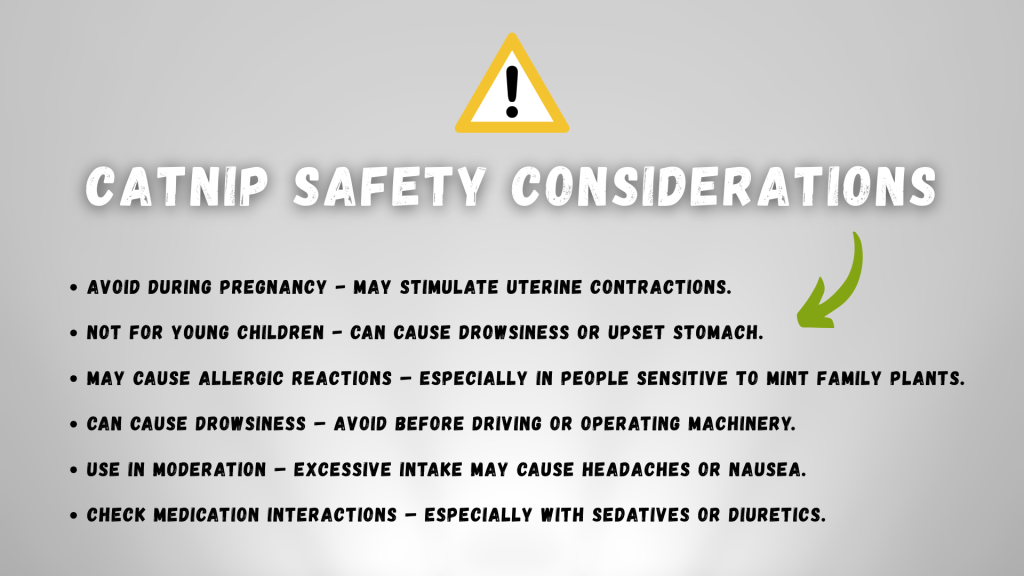
Catnip tea is generally safe, but take precautions to keep you and your cat healthy. Knowing how to make catnip safely involves understanding limits and risks. Whether brewing a catnip tea recipe for humans or catnip tea for cats, moderation prevents issues.
Here are safety considerations for catnip tea:
Human Risks
Most adults can enjoy catnip tea safely, but too much may cause nausea or headaches. Pregnant women should avoid catnip tea recipe for humans, as it may trigger uterine contractions. If you take sedatives, check with a doctor, as catnip tea may increase drowsiness. Limit to 1 to 2 cups daily.
Cat Risks
Can cats drink catnip tea? Yes, but in small doses. Excess catnip tea for cats may lead to vomiting or diarrhea. Serve no more than 1 to 2 teaspoons of diluted catnip water or tea daily, depending on how much catnip tea to give a cat. Kittens under 6 months should not have it.
Interactions to Avoid
For humans, catnip tea may interact with sedatives or blood thinners, so consult a doctor if medicated. For cats, avoid combining catnip tea for cats with other stimulants, like sure treats, to prevent overstimulation. Always use a trusted catnip tea for cats recipe for safety.
Creative Catnip Tea Recipes
Spice up catnip tea with creative recipes for you and your cat. From soothing human blends to playful cat treats, catnip recipes add fun to making catnip tea. Whether it’s a catnip for humans recipe or how to make catnip tea for cats, these ideas elevate your experience.
Below are creative catnip tea recipes:
Herbal Blends for Humans
Combine catnip tea from fresh leaves with chamomile or peppermint for a relaxing blend. Steep one teaspoon of catnip and chamomile in 8 ounces of hot water for 5 minutes. This catnip tea recipe enhances calm and is ideal for evenings. Add honey for a sweet catnip for humans recipe.
Catnip Treats for Cats
Brew one teaspoon of dried catnip in 4 ounces of water, cool, and freeze into ice cubes for a catnip tea for cats recipe. Offer one small cube as a treat. This method of how to make catnip tea for cats doubles as catnip water, keeping cats entertained.
Infused Variations
Try a catnip tea recipe with lavender or rose for humans, steeping one teaspoon each for a floral twist. For cats, mix catnip water with a drop of tuna juice for appeal, serving one teaspoon. These catnip recipes make catnip tea versatile for both.
Here are creative catnip recipes:
- Blend catnip with lavender. Steep one teaspoon each for a soothing catnip tea for humans.
- Freeze catnip water. Soak one teaspoon of catnip in 8 ounces of water for cat ice treats.
- Mix catnip with valerian. Combine one teaspoon each for a sleepy catnip tea recipe for humans.
- Make catnip broth. Boil one teaspoon of catnip in 4 ounces of water, cool, and serve one teaspoon to cats.
- Add lemon balm. Steep with catnip for a zesty catnip for humans recipe.
- Create catnip sprinkles. Dry catnip, crush, and sprinkle on cat toys via how to make catnip.
- Pair catnip with rose. Steep a floral catnip tea recipe to relax.
Tips for Growing and Harvesting Catnip

Growing catnip ensures a fresh supply for catnip tea. Whether brewing catnip tea from fresh leaves or drying it to make catnip tea for cats, home-grown catnip is practical and fun. These tips help you cultivate and prepare catnip for catnip recipes.
Here are tips for growing and harvesting catnip:
Growing Catnip
Catnip loves sunny spots with well-drained soil. Plant seeds or seedlings in spring, 18 inches apart. Water regularly, but don’t overdo it. This easy herb grows quickly, and it is ready to make catnip tea in weeks. Protect young plants from cats to ensure a good yield.
Harvesting Leaves
Harvest catnip before flowering for potent leaves, ideal for making catnip tea. Cut stems in the morning, rinse, and air-dry in shade for 1 to 2 weeks. Use fresh leaves for catnip tea, or dry them for long-term catnip tea recipe storage.
Storing Catnip
Store dried catnip in airtight containers to preserve flavor for catnip tea recipe or catnip for humans recipe. Keep in a cool, dark place, ensuring it’s ready for how to make catnip year-round. This supports both human and cat catnip recipes with fresh quality.
Conclusion: Is Making Catnip Tea Worth It?
Absolutely. Catnip tea helps you relax and gives your cat a boost of joy. With easy catnip tea recipes, you can brew a soothing cup for yourself or whip up catnip tea for cats in minutes. Whether it’s a catnip tea recipe for humans to ease stress or playful catnip water, this herb does it all. Grow your own, try fun catnip recipes, and enjoy safely. Once you learn how to make catnip tea, you’ll wonder why you didn’t start sooner.
FAQs
Is catnip tea safe for humans?
Catnip tea is safe for most adults, calming nerves and aiding digestion. Avoid excess, as it may cause nausea. Pregnant women should skip the catnip tea recipe for humans and consult a doctor.
Can cats drink catnip tea?
Yes, can cats drink catnip tea? Catnip tea for cats is safe in small doses, sparking play or calm. Offer 1 to 2 teaspoons of catnip tea per cat.
How much catnip tea is safe for cats?
Serve 1 to 2 teaspoons of diluted catnip tea for cats daily. Overuse may upset stomachs, so follow a catnip tea for cats recipe.
Can I use fresh catnip for tea?
Yes, catnip tea for humans is great. Steep 2 to 3 teaspoons of catnip to create a vibrant catnip tea recipe for humans.
Does catnip tea help with anxiety?
Catnip tea reduces anxiety with sedative effects, making it ideal for humans. Just sip 1 cup before bed.
Is catnip tea safe for kittens?
Kittens under 6 months should avoid catnip tea for cats. Their systems are sensitive, so skip how to make catnip tea for cats until older, per the catnip tea for cats recipe.
Can I grow catnip for tea?
Growing catnip is simple. Plant in sunny soil, harvest leaves, and use for a catnip tea recipe or catnip water, ensuring fresh catnip recipes.
How do I store catnip for tea?
Dry catnip is used to make catnip and stored in airtight containers. This preserves the flavor for catnip tea and is ready for brewing.
Our articles are researched, edited and regularly reviewed. Sources and references supplied in the article remain part of the published content.