


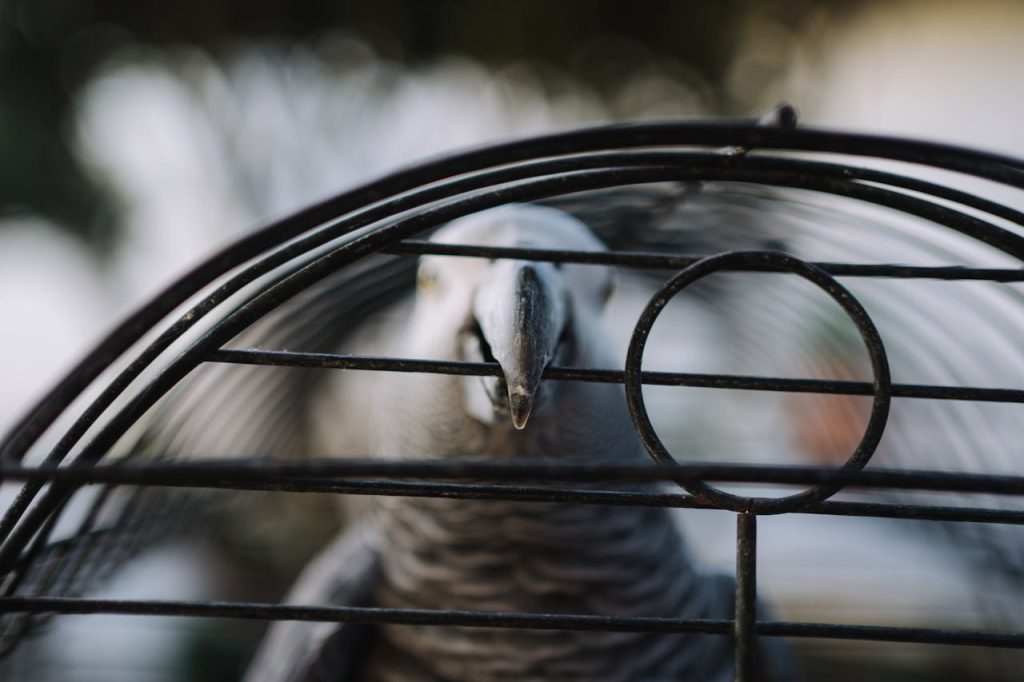
Do you have a Senegal Parrot? These medium-sized parrots need big cages. There is more to choosing a parrot’s cage than you think. Cages influence their behavior, as well as their physical health. So, it should be more than a place for them to live. You don’t have to worry. We have a guide just for you!
Table of Contents
Understanding Your Parrot Needs
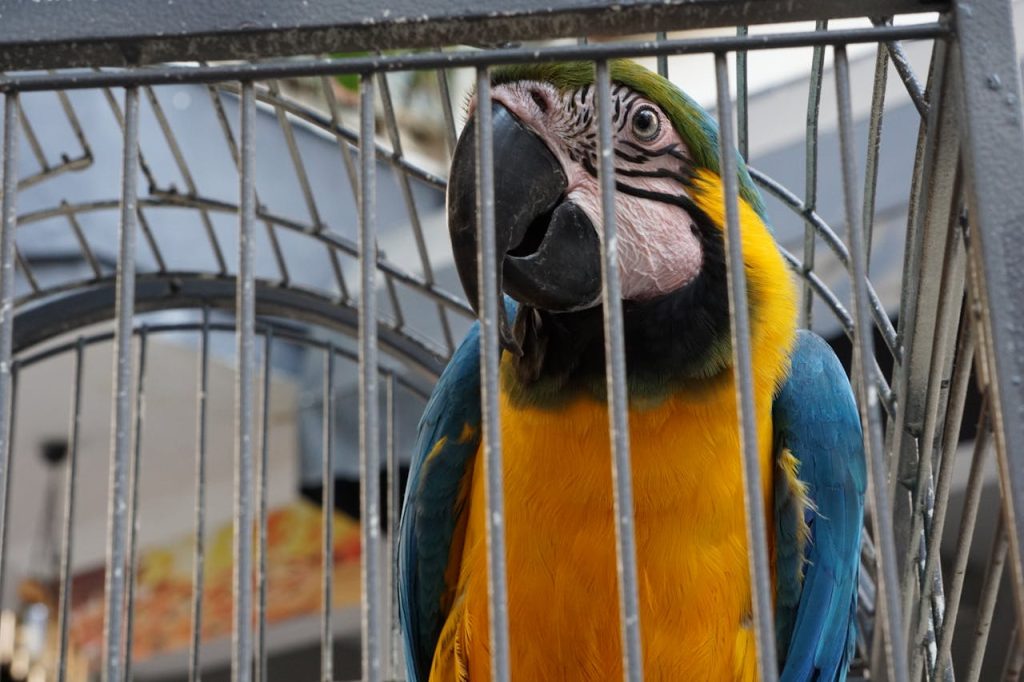
Every parrot is different. So, get to know yours! Their size, activity level, and behavior matter. These factors influence the selection process.
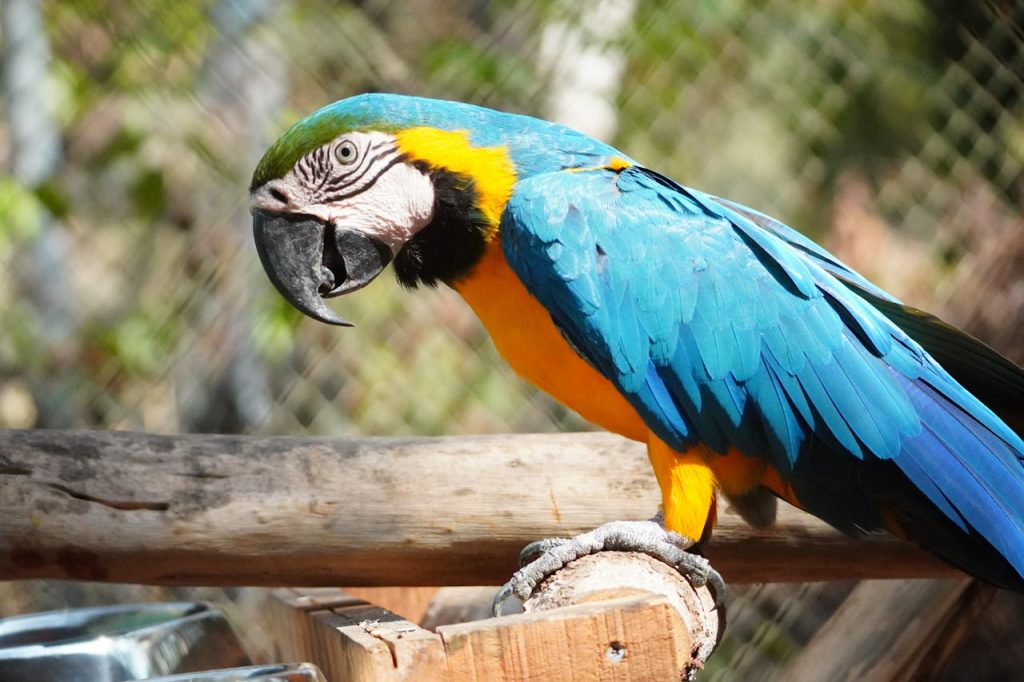
Let’s have a look at a Senegal parrot down below:
Activity level
These birds are extremely active. They enjoy activities like climbing, chewing, and exploring. A cage for parrots needs to be spacious to accommodate their activity level.
Intelligence
Senegal parrots are among the most intelligent. Therefore, they need mental stimulation, which can help with boredom and behavior. They can be aggressive, pluck their feathers, scream, have depression, and struggle with obesity.
Size
These birds require bigger cages than the average bird. Their cage needs to be 24 inches in length, width, and height. While this size is usually recommended, a large cage would be better. As mentioned, these parrots need a spacious cage for them to thrive.
Material and Construction

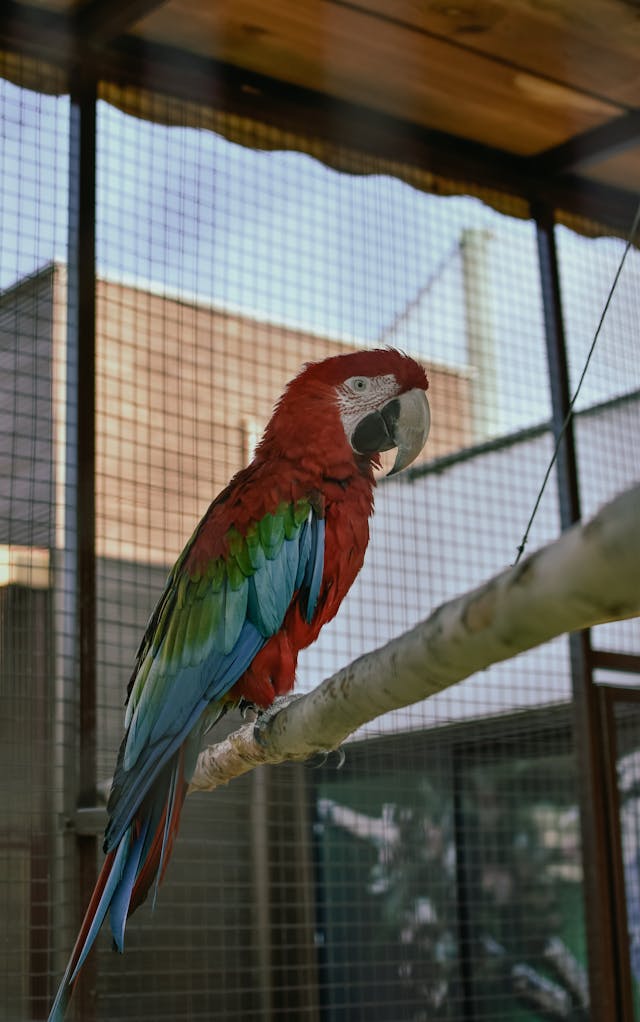
Stainless Steel
- Pros: It does not rust, chip, or peel. Other selling points are how safe and durable they are.
- Cons: They can cost a pretty penny and are heavier than others. Although they are easy to clean, moving while cleaning may be difficult.
Powder Coated
- Pros: These cages are economical! Which means that they are very cost-efficient. Simply sandblast your cage to remove the old powder coating before applying a new layer. Different colors can be used, too. It is as easy as that!
- Cons: They are not the easiest to clean because of their texture.
Wrought Iron
- Pros: Birds spend a lot of time chewing on their cages, so their chew resistance makes them a great choice. They are also sturdy and provide good ventilation.
- Cons: They are heavy, require maintenance, are costly, noisy, and potentially toxic.
Cage Design Features
Bar spacing
The space of the cage bars shouldn’t be too big as they may escape. Do not opt for a cage that has small spacings in between either. The spacing should be just right. Compare the cage to your bird, and just make sure they won’t be able to escape. This should help you in choosing.
Door size
You should clean the cage often and need a big enough door. Your bird needs to be able to get in and out easily, with your help of course. The door should be secure but easy to remove.
Feeding and Water Stations
Their feeding and water stations need to be away from their perch. Also, ensure that these stations are high enough to help with their hygiene. They must be secure and easy to remove, just like their doors. This makes things easy for you when feeding, cleaning, and ensuring they don’t escape.
Perches and Accessories

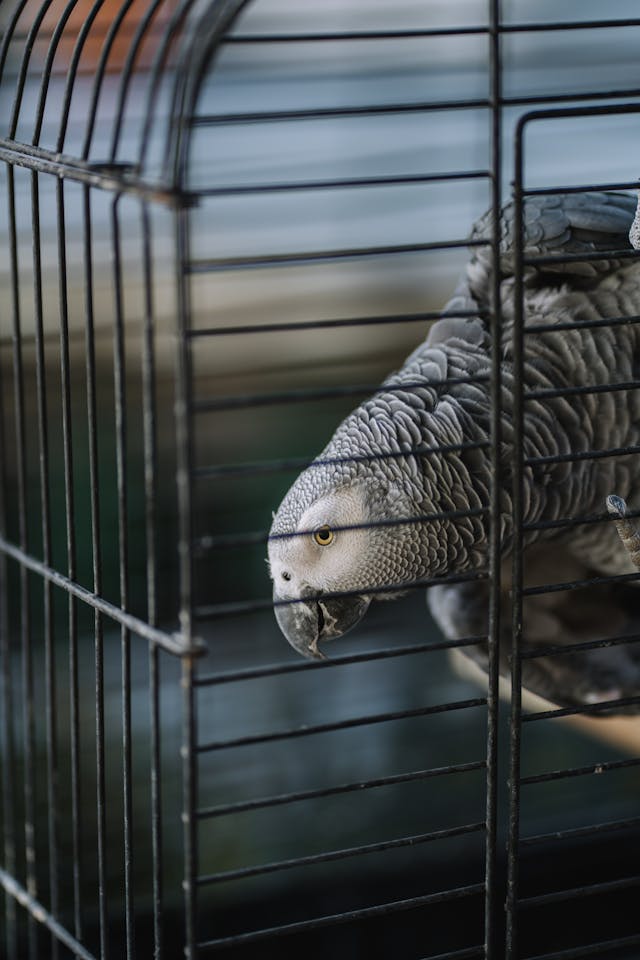
Do you want a happy, healthy bird? Toys are the way to go! They don’t need much; two or three are more than enough to keep them busy. Remember to swap them out for new toys, as birds can get bored after a while. Perches, on the other hand, are super important. Have a look down below.
Perches
Your cage should have a perch. It’s more than an accessory. It provides birds with comfort, foot health, and stimulation both mentally and physically.
Toys
Here are 10 toys for your parrot to keep them entertained:
- Wooden blocks or branches
- Bird-safe leather strips or knots
- Vegetable-tanned leather toys
- Hard plastic toys designed for birds
- Puzzle feeders
- Foraging wheels or boxes with hidden compartments
- Treat-dispensing balls or toys
- Shreddable foraging toys
- Bells or noise-making toys
- Mirrors
A Cage for Parrots: Additional Factors to Consider
Location of the Cage
Yes, the cage matters, but the location does, too. When you have your perfect cage, consider temperature, drafts, and social interactions. Your bird should not be in direct sunlight for long. Avoid environments with cold drafts and those that fluctuate in temperature. Your bird can become stressed, which can lead to health issues. Who wants that?
Socially, these birds like to talk and interact. The location should accommodate interaction but avoid noise. Pets and children are unpredictable and can cause harm, so it should also keep your birdie safe from them. Supervise if you want children and animals to interact with your parrot.
Maintenance and Cleaning
Hygiene and health are important when it comes to keeping birds. You should spot-clean your cage daily and thoroughly clean it weekly. Some products are harmful to birds because they contain chemicals and aerosols. Rather, use bird-safe products.
You want to prevent fungal and bacterial growth by using bleach. The ratio should be 1 part bleach to 10 parts water. All the items that have been washed should be dry before being placed back inside the cage.
Look at wear and tear every now and then to prevent injury and keep birds safe. If left untreated, birds can swallow rust. This can be fatal for birds.
Conclusion
Having a bird can be fun but requires a lot of work. Select the right cage for parrots, as it can greatly affect your feathered friends. You can achieve this by focusing on size, material, and design. Other than that, perches and accessories can enhance your parrot’s quality of life. Buy the right cage and change your bird’s life today!