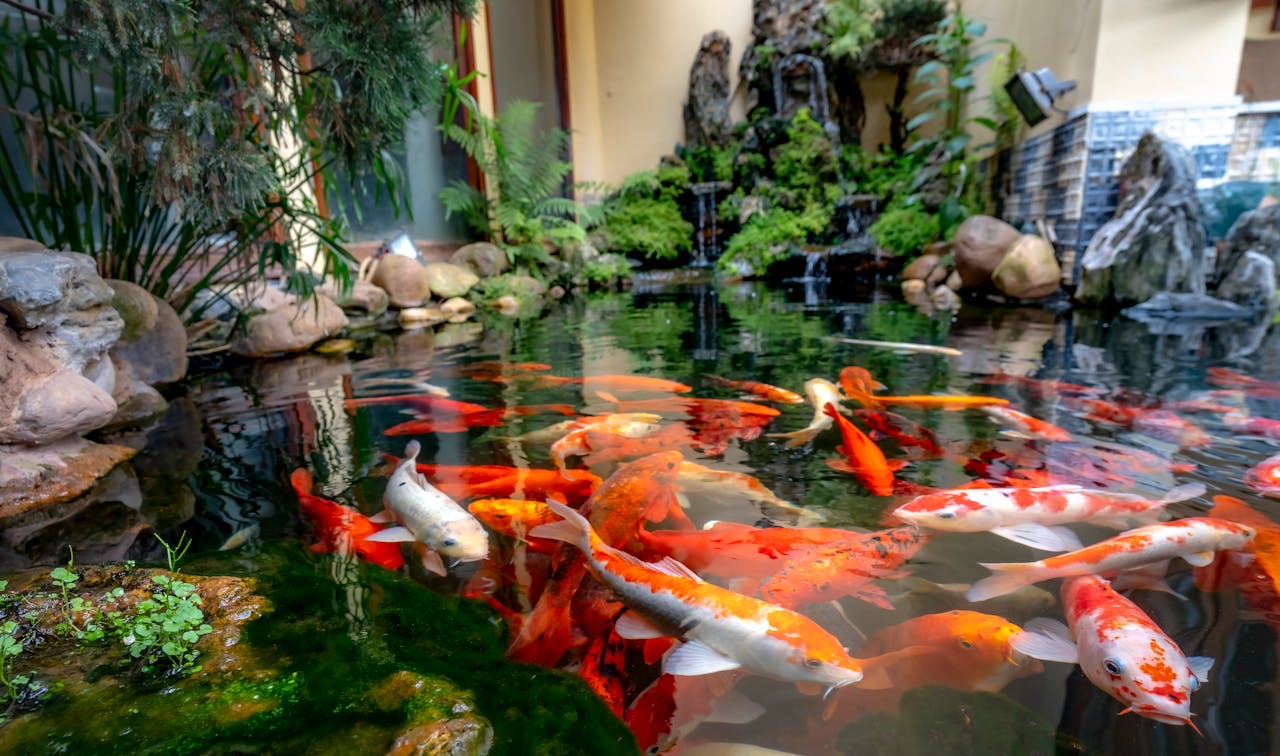
Want to create a serene oasis right in your backyard? Koi fish ponds has been shown to be incredibly relaxing for individuals. The gentle sounds of water flowing and the sight of fish swimming reduces symptoms of both stress and anxiety. This article discusses it all – from planning to maintaining koi fish ponds. Let’s jump right in and explore how to build your dream koi fish pond!
Table of Contents
Planning Your Koi Fish Pond
Koi Fish Healthier Pets Today by Content Creation TeamThoughtful planning is incredibly important as it lays a solid foundation. This ensures that your koi pond fits seamlessly into you landscape and your fish have a healthy environment.
Here is what you should consider:
- Size and Depth: Koi fish require space to grow and thrive. You should aim for a minimum depth of 3 feet to ensure they have enough room during winter and to prevent algae growth. The size of the pond should accommodate the number of koi you intend to keep. As a general rule, 250 gallons of water is recommended per fish.
- Location: Choose a sunny spot that receives partial shade throughout the day. This balance helps maintain water temperature and prevents excessive algae growth. Ensure the area is free from overhanging branches and debris, providing a safe environment for your koi.
Gathering Materials

Once the foundation has been laid by plans, it’s time to start gathering some materials. All materials should be high-quality so that it does not only look better but provides your koi fish with a healthy ecosystem.
To build your dream koi fish pond, you’ll need the following materials:
- Liner: A durable pond liner is crucial for retaining water. Options include EPDM rubber, PVC, or butyl rubber liners.
- Pumps and Filters: A reliable koy pond filter keeps the water clean and healthy for your fish. Invest in a quality pump and filtration system suitable for the size of your koi pond.
- Aeration System: Oxygen is vital for koi health. An aeration system, such as a fountain or air pump, helps maintain adequate oxygen levels in the water.
- Rocks and Plants: Incorporate natural elements like rocks and aquatic plants to create a balanced ecosystem in your koi pond. Plants provide shade, hiding spots, and contribute to water quality.
Excavating the Pond
Now that you have everything you need, it’s time to start digging.
Here is what you need to do:
- Mark the Area: Use a garden hose or string to outline the desired shape of your koi fish pond.
- Dig the Pond: Start digging while keeping in mind the different depths needed for your koi. Create shallow areas for plants and deeper sections for fish.
- Add a Bottom Drain: For easy cleaning and water changes, consider installing a bottom drain that connects to your filtration system.
Installing the Liner

This gets done after excavation. Lining prevents leaks and ensures a stable environment for the fish.
Do the following to install the liner:
- Smooth the Bottom: Remove any sharp objects or rocks that could puncture the liner.
- Lay the Liner: Unfold the liner and let it settle into the pond. Make sure it overlaps the edges by at least 12 inches.
- Secure the Edges: Use stones or bricks to secure the liner’s edges and prevent it from moving.
Filling the Pond
It’s finally time for one of the more exciting parts of building your dream koi pond – filling it up. You get to watch what you have been working so hard on come together. It’s pretty easy.
Simply:
- Add Water: Use a garden hose to fill the pond slowly. This allows the liner to adjust and settle into place.
- Dechlorinate: If you’re using tap water, add a dechlorinator to ensure the water is safe for your koi.
Adding Koi Fish
All your pond needs now is the koi fish. But there are some things that you should consider.
They are:
- Choose Healthy Koi: Select koi from a reputable dealer. Look for bright colors and active behavior.
- Acclimate Your Fish: Before releasing your koi into the pond, acclimate them to the water temperature by floating their bag in the pond for about 30 minutes.
Maintaining Your Koi Pond
Read by Healthier Pets TodayDid you know that the water needs to remain clean and clear? This way you can prevent issues like algae growth which can help keep those oxygen levels in check.
Here is how you can do that:
- Monitor Water Quality: Test pH, ammonia, nitrites, and nitrates regularly. Aim for a pH of 7.0 to 8.5 for optimal koi health.
- Clean Filters: Regularly clean your pond’s filter and pump to ensure efficient operation.
- Feed Koi Wisely: Feed your koi a balanced diet, adjusting portions based on the season and water temperature.
Conclusion
Creating your dream koi fish pond is an enriching project that combines thoughtful planning, quality materials, and regular maintenance. By paying attention to essential factors like size, location, and water quality, you’ll establish a thriving ecosystem that nurtures your koi and enhances the charm of your outdoor space. Regular upkeep ensures that your koi and ponds remain picturesque retreats while supporting the health of your fish. As you enjoy the tranquility and beauty of your koi pond, you’ll find that the effort invested in its creation and maintenance brings immense joy and satisfaction. Dive into this rewarding journey and watch as your koi pond flourishes, becoming a cherished part of your home for years to come.
Koi Fish Ponds by Healthier Pets TodayOur articles are researched, edited and regularly reviewed. Sources and references supplied in the article remain part of the published content.