


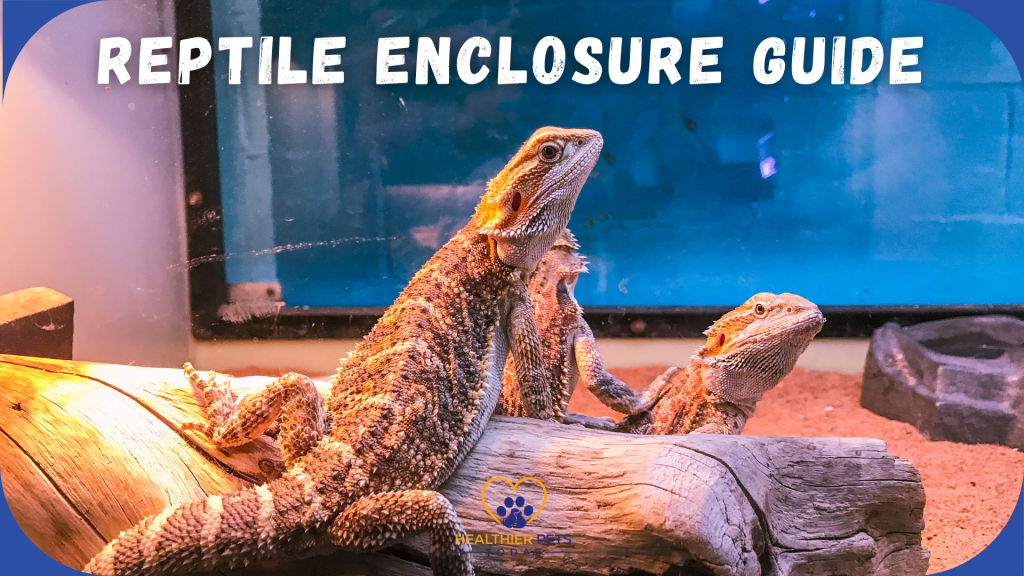
Selecting a reptile enclosure for your lizard can be challenging due to the numerous options available. Whether you’re a first-time owner or upgrading your pet’s space, choosing the proper reptile enclosure ensures your lizard stays healthy and content. This comprehensive guide covers enclosure types, essential features, reliable brands, and their top products, as well as setup tips, maintenance, and more.
With detailed, actionable advice, let’s ensure your lizard thrives in a comfortable home!
What Are Reptile Enclosures?

A reptile enclosure is a cozy space built to meet your lizard’s specific needs. It provides the right temperature, humidity, lighting, and room for eating, resting, and moving. An unsuitable reptile enclosure can cause stress or illness, impacting your lizard’s behavior, appetite, or growth. Bearded dragons need broad areas for basking, while geckos require taller spaces for climbing.
A well-chosen enclosure mimics their natural environment, supporting their physical and mental health. Consult care guides for your lizard’s temperature, humidity, and space requirements. Consider their adult size to avoid the need for frequent upgrades. Measure your room to confirm the enclosure fits. A proper setup keeps your lizard active and happy for years to come.
Types of Reptile Enclosures
With an understanding of what enclosures are, let’s explore the types available. Reptile enclosures are available in various materials, each tailored to meet the specific needs of different lizards.
Here’s a detailed overview with pros and cons:
Glass Enclosures
Glass reptile enclosures, also known as terrariums, provide clear visibility and are suitable for lizards that require consistent temperatures, such as leopard geckos. Front-opening doors simplify feeding and handling.
| Pros | Cons |
| Clear view of your lizard | Can lose heat quickly |
| Durable and easy to clean | Heavy to move |
| Supports lighting fixtures | May need insulation for humidity |
PVC Enclosures
PVC reptile enclosures are lightweight, durable, and excel at retaining heat and humidity, making them ideal for tropical reptile habitats, such as those of crested geckos. They’re low-maintenance.
| Pros | Cons |
| Retains heat and humidity | Less transparent |
| Lightweight and sturdy | Higher initial cost |
| Easy to clean | Limited ventilation without mods |
Wooden Enclosures
Wooden enclosures provide insulation for arid lizards, such as bearded dragons. They’re robust but require sealing to prevent water damage.
| Pros | Cons |
| Excellent insulation | Susceptible to water damage |
| Customizable sizes | Heavy and bulky |
| Aesthetically pleasing | Harder to clean |
Screen Cages
Screen cages for lizards offer superior ventilation, making them ideal for chameleons that require airflow. They’re less effective for high-humidity lizards.
| Pros | Cons |
| Excellent airflow | Poor humidity retention |
| Lightweight and portable | Less durable |
| Easy misting for climbers | Limited insulation |
Choose an enclosure that aligns with your lizard’s environmental needs. Glass or PVC suits most; screen cages are best for ventilation-focused species. Ensure it fits their adult size and your space.
Choosing the Right Reptile Enclosure
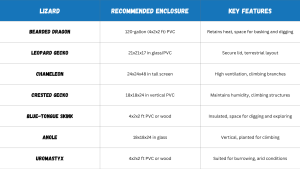
Selecting the proper lizard enclosure requires balancing your lizard’s size, environmental needs, and key functional features to ensure their comfort and health.
Below is a guide to making an informed choice:
Species-Specific Size and Enclosure Needs
Each lizard species has unique size and environmental requirements to support their natural behaviors. Consult care guides or a vet to confirm your lizard’s adult size and needs, and measure your available space to ensure the enclosure fits.
Here are recommendations for popular lizards:
- Bearded Dragons: Require a 120-gallon (4x2x2 feet) enclosure for basking and digging. PVC enclosures are ideal for retaining heat, providing ample space for temperature gradients to occur.
- Leopard Geckos: Require a compact 21x21x17-inch glass or PVC enclosure with a secure lid to prevent escapes, as they are suited to terrestrial habits.
- Chameleons: Thrive in tall screen cages (e.g., 24x24x48 inches) to support climbing and high ventilation needs, ensuring airflow for their arboreal lifestyle.
- Crested Geckos: Require vertical 18x18x24-inch PVC enclosures with branches for climbing, and maintain humidity for their tropical environment.
- Blue-Tongue Skinks: Require a 4x2x2-foot enclosure for digging and exploring, with insulation made from PVC or wood to suit their arid to semi-arid habitat preferences.
- Anoles: Prefer vertical 18x18x24-inch glass enclosures with plants for climbing, as this accommodates their arboreal nature.
- Uromastyx: Requires a 4x2x2-foot enclosure, preferably PVC or wood, for their active, burrowing behavior in arid conditions.
Choosing a slightly larger enclosure than the minimum size provides flexibility for creating effective temperature and humidity gradients, enhancing your lizard’s comfort. Verify the dimensions and material compatibility before making a purchase.
Essential Features for Functionality
To ensure the enclosure supports your lizard’s well-being, prioritize these features:
- Ventilation and Humidity: Adequate airflow prevents respiratory issues, especially for chameleons, where mesh tops or vents are essential. Tropical lizards, such as crested geckos, require high humidity, which is best maintained in PVC enclosures. Monitor levels with a hygrometer and use a humidifier if needed [petco.com].
- Lighting and Heating: Lizards require UVB lighting for vitamin D synthesis and heat for basking (e.g., 95-100°F for bearded dragons). Enclosures must support secure lamp mounting and be made of heat-resistant materials. Install a thermostat to regulate the temperature consistently.
- Safety and Accessibility: Secure doors or lids prevent escapes, and front-opening designs simplify handling and cleaning, reducing stress for shy lizards. Choose enclosures with tempered glass or strong mesh for durability, and inspect latches for reliability.
By selecting an enclosure that matches your lizard’s size and environmental needs while incorporating these features, you can create a functional and comfortable habitat. Consult care guides to ensure all specifications are met.
Top Reptile Enclosure Brands and Products
Finding a reliable reptile enclosure starts with trusted brands and their standout products.
Below, we highlight top brands and their best enclosures to help you choose:
New Age Pet
New Age Pet crafts durable enclosures using ECOFLEX composite, ideal for reptiles like tortoises and snakes. Their designs focus on easy cleaning and ventilation.
- New Age Pet Mojave Reptile Lounge – 36″: This 36-inch by 18-inch by 18-inch PVC and glass terrarium suits your iguana, snake, or tortoise. Sliding glass doors make cleaning easy, and the mesh top supports UV lamps. Its ECOFLEX material resists moisture and odors. Owners love its sturdy build and stylish look, though some note it’s not watertight, so avoid standing water setups. Adjust the locking bracket to prevent scratching the glass.
Royxen
Royxen builds spacious glass terrariums tailored for bearded dragons. Their enclosures emphasize premium construction and ample space for active reptiles.
- Royxen Bearded Dragon Tank (up to 78 gal): This 48-inch by 24-inch by 18-inch tank is perfect for your bearded dragon. Double front-opening doors and built-in lamp fixtures simplify feeding and lighting. The mesh top ensures ventilation, and the waterproof base supports bioactive substrates. Owners praise its roomy design and clear view, though some seal edges to prevent fine substrate leaks, especially for desert environments.
RunDuck
RunDuck creates foldable glass terrariums with innovative designs, great for larger reptiles. Their enclosures prioritize ventilation and easy access for maintenance.
- RunDuck 45 Gal 360° Panoramic Terrarium: This 48-inch by 24-inch by 24-inch terrarium suits your bearded dragon or snake. Its foldable design and front feeding access make setup and care straightforward. The 360-degree panoramic view and top ventilation keep air flowing. Owners appreciate its spaciousness and easy assembly, but some add insulation for humid setups to maintain stable conditions for tropical reptiles.
Phailozoo
Phailozoo offers tempered glass terrariums with front-opening designs, ideal for bioactive setups. Their enclosures focus on durability and reptile comfort.
- Phailozoo 50 Gallon Reptile Tank: This 36-inch by 24-inch by 18-inch tank is great for your bearded dragon or gecko. Front-opening tempered glass doors and top ventilation support bioactive environments. Its sturdy build handles various substrates. Owners love its clear view and easy maintenance, though some recommend sealing small gaps to keep fine substrates contained, ensuring a tidy habitat.
OIIBO
OIIBO designs compact glass terrariums for small reptiles like geckos or snakes. Their enclosures emphasize secure locks and simple assembly.
- OIIBO 20 Gallon Full-Glass Long Reptile Terrarium: This 30-inch by 12-inch by 12-inch terrarium is ideal for your gecko or small snake. Double front-opening doors with a safety lock keep your pet secure, and the mesh top allows UVB penetration. Its compact size fits small spaces. Owners praise its sturdy glass and quick setup, though some seal minor gaps for fine substrates.
Essential Accessories for Reptile Enclosures
Enhance your lizard’s home with:
- Heat and UVB Lamps: Select species-specific lamps, such as Zoo Med ReptiSun, for geckos.
- Substrate: Choose coconut fiber for humid or sand for arid setups.
- Hides and Décor: Add natural hides, plants, or driftwood to reduce stress.
How to Set Up a Reptile Enclosure
Follow these steps to create a great home:
- Choose a Location: Select a quiet spot away from drafts or sunlight.
- Add Substrate: Use a species-appropriate substrate, such as topsoil or sand, for leopard geckos. Avoid reptile carpet to prevent bacteria.
- Install Heat and Light: Mount a halogen lamp and a UVB light to create a temperature gradient. Include a thermostat.
- Add Hides and Décor: Provide three hides (cool, warm, humid) and branches or rocks.
- Monitor Conditions: Use a thermometer and hygrometer for temperature (e.g., 95-100°F for bearded dragons) and humidity.
Maintaining Your Reptile Enclosure
Keeping your enclosure clean and in good working order is crucial.
Here’s how:
- Daily: Spot-clean waste, refresh water, and check the temperature and humidity with a thermometer and hygrometer. Ensure lamps work.
- Weekly: Remove soiled substrate, wipe surfaces with reptile-safe cleaner, and inspect décor for wear.
- Monthly: Deep-clean with a disinfectant, replace substrate if needed, and check seals or latches.
If the humidity is low, consider adding a humidifier or increasing the mist. If temperatures fluctuate, adjust the lamp placement or wattage accordingly. Regular maintenance helps prevent mold and bacteria, keeping your lizard healthy.
Bioactive Enclosures: A Natural Option
Bioactive enclosures use live plants, soil, and critters like springtails to create a self-sustaining ecosystem. They mimic natural reptile habitats, reduce cleaning, and enrich your lizard’s life. Bearded dragons and crested geckos thrive in bioactive setups.
Steps to Start:
- Choose a PVC or glass enclosure with good sealing (e.g., Zen Habitats).
- Layer substrate with soil, sand, and leaf litter.
- Add safe plants like pothos or spider plants.
- Introduce cleanup crew (e.g., isopods, springtails).
- Monitor humidity and water plants lightly.
Common Mistakes to Avoid
Avoid these pitfalls:
- Too Small: Small enclosures restrict movement. Plan for adult size.
- Poor Ventilation: Stagnant air causes health issues. Use vents or mesh tops.
- Wrong Material: Glass for arid or wood for humid lizards can fail. Match to needs.
- No Thermostat: Uncontrolled heat harms lizards. Use a thermostat.
Review your lizard’s needs and specs before purchasing or consult a vet for advice.
Conclusion: Enclosures Lizards Love
A well-chosen reptile enclosure ensures your lizard’s health and happiness. Whether it’s a small lizard cage for a leopard gecko or spacious cages for lizards like bearded dragons, prioritize size, ventilation, and species needs.
Reliable brands like Zen Habitats and REPTI ZOO offer excellent reptile enclosures for all lizards. Set up with proper lighting, substrate, and décor, and maintain it diligently to avoid mistakes like undersized enclosures.
With this guide, your lizard will love their new home… that’s a promise!
FAQs
What size reptile enclosure is best for a bearded dragon?
A 4x2x2-foot (120-gallon) enclosure suits adult bearded dragons for basking and movement.
How often should I clean my lizard enclosure?
Clean weekly by removing waste and refreshing the substrate. Deep-clean monthly with disinfectants.
Do all lizards need a heat lamp?
Most require heat lamps, but crested geckos may not need them. To be sure check care guides!
Can a fish tank be a small lizard cage?
Yes, for geckos, but add ventilation and UVB lighting.
What’s the best substrate for cages for lizards?
Use topsoil or sand for arid species and coconut fiber for humid species.
How do I maintain reptile habitats?
Monitor temperature and humidity daily, clean regularly, and update the décor.
Can I house multiple lizards together?
Most prefer solitary spaces to avoid conflicts. Check with a vet.
How do I know if my lizard is content?
Content lizards eat, bask, and move actively. Stressed ones hide or seem sluggish.
How often should I replace UVB bulbs?
Replace every 6-12 months as UVB output fades.
When should I upgrade my enclosure?
Upgrade when your lizard outgrows the space or shows stress (e.g., pacing).