Did you know that the Inland Taipan is considered the most venomous snake in the world? Its average venom is 44 mg, which can lead to instant death. This article delves into what you should know about snakes, more venomous snakes and what to do if you get bitten by one. Let’s get started!
Understanding Venomous Types of Snakes
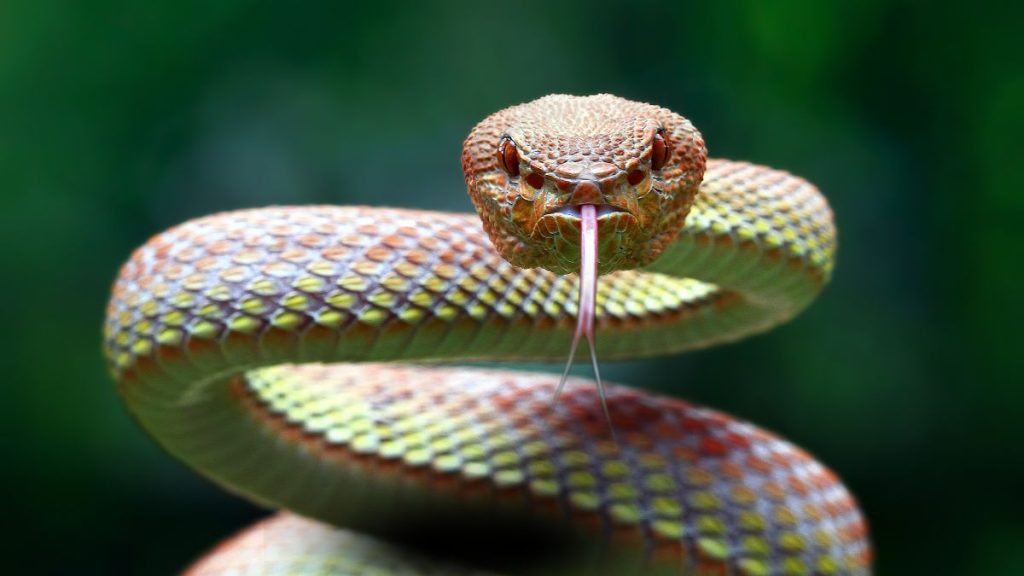
Snake venom is a toxin, a complex mixture of proteins and enzymes, anticoagulants, and other substances. 90% of the venoms are protein by dry weight, and most are reagents. As many as 25 different reagents are found in various venoms, out of which 10 are present in most of them. Want to get to know the most deadliest snakes? The next section lists 9 and discusses each. Let’s take a look!
The Most Venomous Snake on Earth
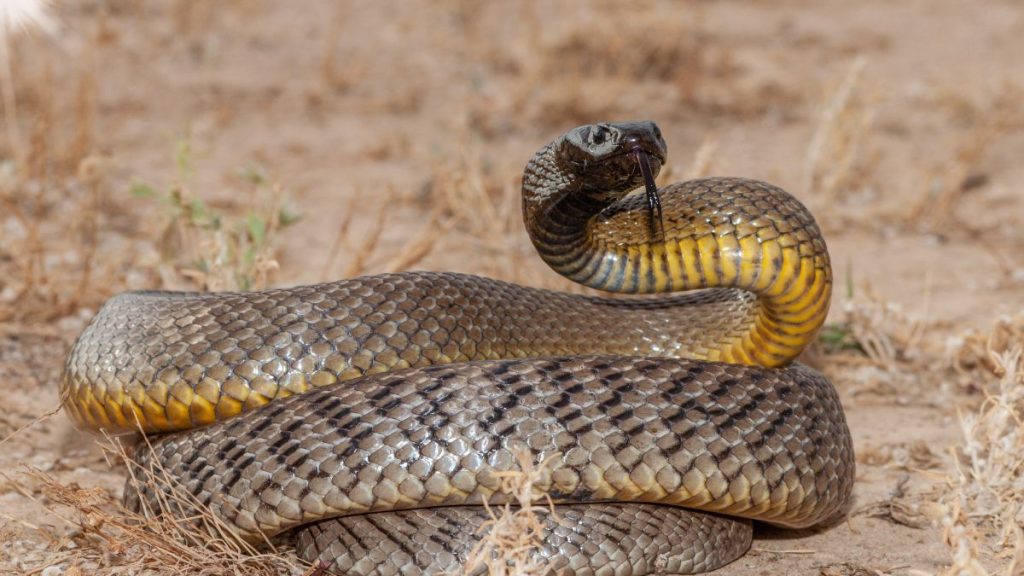
1. Inland Taipan
As mentioned, this snake is the most venomous snake on earth because of its venom toxicity. It is commonly found in remote regions in Australia. One bit can kill about 100 humans or more than 250,000 mice. Shocking, isn’t it?
These snakes are very shy and reclusive despite their title. It prefers to avoid encounters, so you won’t get attract if its not cornered or provoked.
2. Coastal Taipan
The coastal taipan is a species of highly venomous snake in the family Elapidae. Described by Wilhelm Peters in 1867, the species is native to the island of New Guinea and the coastal regions of northern and eastern Australia. The second-largest venomous snake in Australia, the coastal taipan, averages around 6.6 ft long, with the longest specimens reaching 9.5 ft . It has light olive or reddish-brown upperparts, with paler underparts. According to the International Union for Conservation of Nature, the snake is considered a least-concern species.
3. Black Mamba
The black mamba is a species of highly venomous snake belonging to the family Elapidae. It is native to parts of sub-Saharan Africa. Formally described by Albert Günther in 1864, it is the second-largest venomous snake after the king cobra; mature specimens usually exceed 6 ft 7 in and often grow to 9.8 ft. Cases of 14 to 15 ft have been reported. Its skin color differs from grey to dark brown. Young black mambas are likely to be paler than adults and darken with age.
4. Blue Krait
Malayan krait is a highly venomous snake species. The blue Malayan krait is a member of the genus Bungarus and the family Elapidae. The Malayan krait might grow to 43 in, with a tail 6.3 in long. It has a pattern of 27-34 dark-brown, black, or bluish-black crossbands on the body and tail, which are narrowed and rounded on the sides. The first crossband is continuous with the dark color of the head. The dark crossbands are separated by broad, yellowish-white interspaces, which may be spotted with black. Ventrally, it is uniformly white.
5. King Cobra
The King cobra is a venomous snake that is native to Asia. The sole member of the Ophiophagus is not taxonomically a true cobra, despite its common name and some resemblance. It is the world’s largest venomous snake, with an average length of 10.4 to 13.1 ft and a record length of 19.2 ft. The species has diversified colouration across habitats, from black with white stripes to unbroken brownish grey. The king cobra is widely distributed, albeit not commonly seen, and has a range spanning from the Indian subcontinent through Southeastern Asia to Southern China. It preys chiefly on other snakes, including those of its kind. This is the only ophidian that constructs an above-ground nest for its eggs, which are purposefully and meticulously gathered and protected by the female throughout the incubation period.
6. Coral Snakes
Coral snakes sometimes get confused with nonvenomous king snakes, which have similar-coloured bands but are arranged differently. Coral snakes usually hide in leaf piles or burrow into the ground.
7. Rattlesnakes
Rattlesnakes are the most giant venomous snakes in the United States, and most species live in U.S. habitats. Whether stretched out or coiled, they can quickly and perfectly strike one-third or more of their body length from any position.
8. Copperheads
Copperheads vary in color from reddish to golden tan. The coloured bands on their bodies are typically hourglass-shaped. They have a bottomless facial pit between their nostril and each eye. Copperheads are often found in forests, swamps, rocky areas, or near sources of water like rivers. Most adults are about 18-36 inches long. They are not usually aggressive but will freeze when frightened and strike in defense if threatened, contacted or interacted with.
8. Cottonmouths
Adult cottonmouth snakes are, on average, 50-55 inches long. The adult snake’s skin is dark tan, brown, or nearly black, with vague black or dark brown cross-bands. Youngsters have a bold cross-banded yellow, brown or orange pattern with a tail. Cottonmouths are often found in or around water.
Safety and First Aid for Snake Bites

The most important thing to do when you have been bitten by a snake is to stay calm and seek help. Time is critical when it comes to these snakes.
Here is what you can do until you receive medical attention:
- Keep the bitten limb immobilized or below heart level. This will slow down the spreading of the venom.
- Avoid ice, cutting the wound or using a tourniquet because this could worsen it.
- Take note of the snake’s appearance so that your medical professional can more effectively treat the snake bite.
Conclusion
Snake venom is highly toxic saliva containing zootoxins that facilitate the immobilization and digestion of prey and provide defense against threats, which can be life-threatening. The most venomous snakes include coastal taipan, black mamba, king cobra, blue krait, rattlesnake, copperhead, cottonmouth and coral snakes. Now, if you or someone you know gets bitten by one of these, get immediate medical attention. It might just save a life!
Our articles are researched, edited and regularly reviewed. Sources and references supplied in the article remain part of the published content.